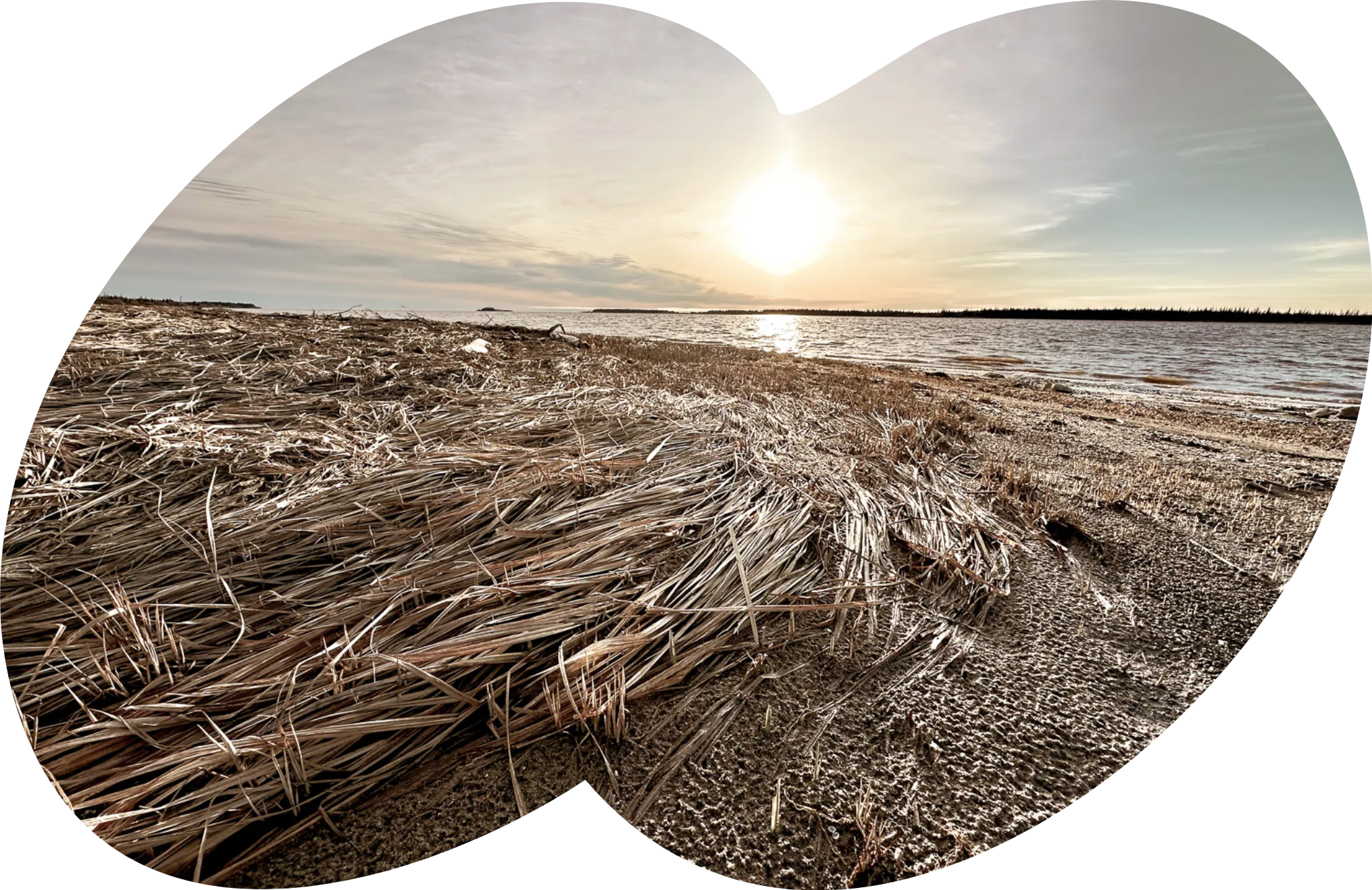
Since 2020, the Cree Nation has protected more than 100,000 km² across 40 areas of Eeyou Istchee—ensuring these lands remain free from mining, forestry, and hydroelectric development. Guided by Cree knowledge and leadership, these protections safeguard not only the environment, but also the cultural traditions, harvesting practices, and way of life that have sustained Eeyou families for generations.

Land
Conservation
Rooted in Respect, Guided by Tradition

Cree hunting, fishing, and trapping rights are fully protected in these areas under the JBNQA and NEQA – Cree rights supersede any conservation or national park legislation.
Eeyou Istchee Protected Areas


Cree Involvement in Conservation
Cree participation in conservation is a right protected by the James Bay and Northern Québec Agreement (JBNQA). Under this historic agreement, Section 22 (Environmental and Social Protection) and Section 24 (Hunting, Fishing, and Trapping) provide the legal foundation for Cree leadership in environmental decision-making. These provisions ensure that Cree voices are central in shaping conservation policies and safeguarding traditional harvesting rights throughout Eeyou Istchee.
Land Conservation Process
Protecting the land of Eeyou Istchee is a living, community-driven journey. Guided by the voices of Elders, tallymen, youth, and community members, the Cree Nation Government works to ensure conservation reflects Cree rights, traditions, and values. Through dialogue, mapping, data-driven analysis, and stewardship, this process builds a strong foundation for Cree-led protection of lands and waters—safeguarding both biodiversity and the Cree way of life for generations to come.
In recent years, the Cree Nation has accelerated the development of protected areas in collaboration with Eeyou communities. The process to identify new areas for future expansion of the protected area network continues across Eeyou Istchee as communities determine local conservation objectives and areas that hold cultural and ecological significance.
What is a Protected Area?
A protected area is land or water set aside to conserve nature, wildlife, and important cultural places. These areas are legally recognized and carefully managed to support long-term protection.
In Quebec and Eeyou Istchee, all protected areas follow the international standards set by the International Union for Conservation of Nature (IUCN).
Protected areas here are classified into different categories, from strict protection to areas that allow for some sustainable development and use.
In Eeyou Istchee, protected areas conserve nature while also preserving Cree ways of life and culturally significant places.
Benefits of protected areas?
- Preserve wildlife and ecosystems
- Promote health and wellbeing
- Reduce disaster risks
- Protect cultural and historical heritage
- Offer educational opportunities
- Pass on traditional knowledge
- Encourage sustainable tourism
- Create employment opportunities
Understanding the Tools Used in Eeyou Istchee
Protected areas in Eeyou Istchee vary in purpose, level of protection, and permitted activities. Most prohibit industrial activities such as mining, forestry, and hydroelectric development, while always upholding Cree hunting, fishing, and trapping rights under the JBNQA. Some emerging models allow certain low-impact, community-supported development if it aligns with long-term conservation goals.
Beyond legislated protected areas, the CNG is exploring other conservation tools. These more flexible approaches are especially valuable in places where full legal protection may not be possible, but where conserving ecological and cultural values remains a priority.
Long-term Stewardship
and Management
Long-term stewardship goes beyond the establishment of a protected area – it ensures that the protected areas are actively cared for, used responsibly, and managed in a way that reflects Cree interests, knowledge, and values. It involves the following aspects:
Governance
- Determines the decision-making powers
- Delegates management and operational duties
- Involves policy-making, legal agreements, and leadership
Management
- Responsible for realisation of stewardship mandate
- Involves planning, budgeting, and coordination of resources
- Oversees operational activities
Operations
- Responsible for day-to-day stewardship activities:
- maintenance, monitoring, etc.
- Ensure the safety and well-being of visitors and the natural area
- Coordination with tallymen and Land Keepers
Cree-led Governance
and Management
The Cree Nation Government is in the early stages of exploring governance and management models for protected areas in Eeyou Istchee.
In February 2025, a forum led by the Cree Nation Government brought together community leaders, decision-makers, and technical experts to begin reflective conversations on what long-term management in Eeyou Istchee should look like. Conversations with communities are ongoing, ensuring that future stewardship models are grounded in local values and knowledge.
Various Paths to Protect Eeyou Istchee
Legal protections, stewardship initiatives, and other conservation measures all play a role in caring for the land, waters, and Cree culture. By bringing these tools together, the Cree Nation is working toward safeguarding as much of Eeyou Istchee as possible for future generations.
Dig Deeper

Community Engagement Process
Community Engagement Process
From 2016 to 2019, more than 334 community members across Eeyou Istchee took part in interviews, focus groups, mapping, and presentations to identify areas in need of protection from industrial development.
In 2025, community engagement sessions to refine the boundaries of existing protected areas and identify areas to expand the protected and conserved area network and discuss potential management governance are taking place in all Eeyou communities.
Participants
- Tallymen and land stewards
- Elders, women, and youth
- Community leaders and general public
- Local and regional organizations
The community engagement sessions ensure that traditional knowledge, cultural values, and local priorities shape conservation efforts — identifying both where and why areas should be protected.

Integration of Cree Knowledge with Western Science Tools
Insights from the first series of consultations were paired with Geographic Information System (GIS) analytical tools to generate community proposals for future protected areas and support community-driven decision-making processes.
These tools will also be used to refine the boundaries of the existing network in 2025 and generate proposals for future conservation areas based on community feedback.
The GIS conservation mapping tools help to:
- Highlight cultural and ecological priority areas
- Map features like wetlands, rivers, forests, and wildlife corridors
- Overlay industrial data (roads, mining claims, hydroelectric development potential)
- Compare various scenarios to determine the priority areas for conservation
Note: These tools complement and support Cree knowledge.
Negotiation and Refinement of Protected Area Boundaries
Initial community-based proposals for future protected areas are further refined through negotiations between the Cree Nation Government and the Government of Quebec. The negotiations consider the various jurisdictions, conservation objectives, and contextual constraints, including the following:
- Cree rights and traditions
- Legal boundaries
- Biodiversity conservation
- Industrial activities
Validation, Revision, and Refinement
Validation and boundary refinement are critical to ensuring that conservation proposals truly reflect Cree values and priorities.
Through continued community input and revisions, the iterative boundary refinement process with aims to meet the following main objectives:
- Confirm shared conservation goals
- Respect traditional and local knowledge
- Support the foundation for long-term Cree-led stewardship
The next step is to formally designate these areas as official protected areas under Quebec law. Community validation ensures that each protected area reflects the vision, needs, and cultural values of Eeyou Istchee.
This ongoing collaboration strengthens Cree leadership in conservation and lays the groundwork for a lasting, community-driven network of protected and conserved areas.
Ongoing Process and Next Steps
Several areas hold transitory protected status, as defined by the Quebec government. Final legal designation requires:
- Community validation to ensure proposals reflect local knowledge and priorities and align with conservation objectives for the area
- Boundary revisions based on community feedback and data-driven spatial analysis
This iterative process, designed to confirm conservation goals, refine boundaries, identify areas for future protected and conserved areas, and explore long-term Cree stewardship models, continues across Eeyou Istchee.
Protected Area Designations Alignment with IUCN Categories
Protected Area Designations Alignment with IUCN Categories
The chart below shows how Quebec’s categories for designated protected areas align with IUCN categories - from strict conservation to flexible sustainable use*.

* The legislative definitions for Aboriginal-led Protected Area (APA) and Protected Area with Sustainable Use (PASU) are in development (potential for IUCN category V). The other conservation tools (Northern Conservation Areas, Other Effective Conservation Measures) do not align with any of the IUCN protection categories, because they do not meet the minimum protection standards required by the IUCN.

Protected Areas Designations in Eeyou Istchee
Protected Areas Designations in Eeyou Istchee
Areas formally recognized under Quebec legislation, where all industrial activity is prohibited.
Biodiversity Reserves
- Created to protect biodiversity and natural regions.
- Often managed by Quebec’s Ministry of Environment (MELCCFP); may delegate management responsibility to Indigenous Nations or other groups.
- No industrial activity is permitted.
- Limited infrastructure; exceptions made when aligned with conservation objectives.
National Park
- Protect exceptional natural and cultural landscapes.
- Managed by SÉPAQ under Quebec’s Ministry of Environment; may delegate to Indigenous-led organisation (ex. Nibishii Corporation).
- Open to the public (trails, campsites, and educational programs).
- Aim to balance conservation and education.
Territorial Reserves for Protected Area Purposes (TRPAP)
- Temporary protection that pauses all industrial activity.
- Used while studies, consultations, and planning take place.
Emerging Protected Area Mechanisms
Emerging Protected Area Mechanisms
Tools being developed to support long-term conservation while allowing flexibility for culturally appropriate and sustainable forms of development.
Aboriginal Led Protected Area (APA)
- Protects both biodiversity and areas of cultural importance to Indigenous communities.
- Led and managed by Indigenous governments, with roles delegated by the province.
- Industrial development is restricted.
- May allow sustainable land use, if it aligns with conservation and community values.
Protected Area with Sustainable Use (PASU)
- Balance conservation with local and Indigenous development priorities.
- Allow certain low-impact activities (e.g. forestry), if they align with conservation goals and benefit the community.
- Still under development as a formal status.

Other Legislative Conservation Tools
Other Legislative Conservation Tools
Flexible approaches that support long-term conservation without requiring formal designation.
Other Effective Conservation Measures (OECM)
- Areas not legally designated as protected but still contribute to conservation.
- Managed for other purposes (e.g. cultural, spiritual, community use), but still help protect ecosystems.
Northern Conservation Areas (NCA)
- Quebec-led tool to protect the ecological health of northern regions.
- Allow certain sustainable uses, depending on zoning and conservation goals.
Land Use Planning
- Bylaws and other regulations that specify buffers, setbacks, or other restrictions that can protect wildlife and habitats.
- Community land use plans can include designated zones for conservation, culture, or recreation alongside development.
Wildlife Management Policies
- Set legal frameworks for protecting at-risk species and their habitats, including planning and recovery strategies.
- Often include wildlife management zones and regulated activities—like quotas, monitoring, and zoning—to balance human use and ecosystem health.
- Can involve Indigenous co-management, especially in national wildlife areas and migratory bird sanctuaries, giving communities decision-making power.
Non-Legislative Conservation Tools
Non-Legislative Conservation Tools
Indigenous Protected and Conserved Area (IPCA)
- Established and governed by Indigenous nations to protect lands and waters.
- Advance conservation while supporting cultural practices, rights, and community well-being.
- Emphasize Indigenous governance, laws, and knowledge systems in decision-making.
- May allow sustainable use activities if they align with community values and conservation goals.
- Recognized in Canada as a key pathway to meet biodiversity and reconciliation commitments.
Cree Nation Land Keepers program
- Cree Nation Government initiative to manage and monitor the territory.
- Combines traditional knowledge with modern conservation practices.
- Supports stewardship, monitoring, cultural preservation, and local employment.
- Protects land and waters, tracks climate impacts, and strengthens community well-being and identity.
Eeyou Traditional Hunting Law
- Adopted in 2009 by the Cree Trappers’ Association to guide traditional harvesting governance.
- Applies to the Eeyou’s traditional territories, known as Indoh-hoh Istchee.
- Entrusts Tallymen (Kaanoowapmaakin) with stewardship, harvesting oversight, and dispute resolution.
- Rooted in Cree values such as wisdom, humility, respect, and sharing.
Wildlife Habitat Guidelines
- Aims to safeguard the Cree traditional way of life, conserve wildlife habitats and populations, and support knowledge gathering and monitoring of activities and impacts that may affect wildlife.
- Focus on key cultural species like caribou, moose, sturgeon, and migratory birds.